
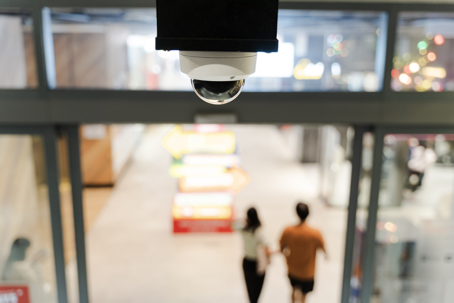
After a fall, the instinct is to look up. You scan the ceiling, the walls, the corners of the room, and spot a camera pointed directly at where you went down. That moment feels like relief. The whole thing was recorded. There’s proof.
What most people don’t realize is that footage on a loop-recording system can be overwritten in 24 to 72 hours, and no Florida statute requires any business to hold onto security footage after an accident. Whether that video survives long enough to help your case depends almost entirely on what happens in the days immediately after your fall. Understanding the legal framework behind preservation, sanctions, and how footage is actually used in court is what separates a strong claim from one built on evidence that no longer exists.
Dan Cytryn, founding attorney of Law Offices Cytryn & Velazquez, P.A. and a Board-Certified Civil Trial Lawyer (a credential held by roughly one percent of practicing Florida attorneys) has lectured on slip and fall case strategy. What follows reflects the kind of analysis that goes into these cases from the first call.
Why Camera Footage Often Decides These Cases
Florida’s slip and fall statute, Fla. Stat. 768.0755, places the burden of proof on the injured person. To recover, you must show that the business had actual or constructive knowledge of the dangerous condition and failed to act. Actual knowledge means the business was directly informed of the hazard. Constructive knowledge is harder to prove. It requires showing either that the condition existed long enough that a reasonable inspection should have caught it, or that the same type of hazard occurs with enough regularity that it was foreseeable.
That second standard is where video becomes irreplaceable. Employee testimony is subject to memory, loyalty, and coaching. Inspection logs can be incomplete or conveniently silent. A continuous video record showing a puddle forming, growing, and going unaddressed for 45 minutes is objective in a way no witness can match. It answers the core factual question the statute demands: how long did this hazard exist before someone got hurt?
How Long You Have Before the Footage Disappears
There’s no fixed retention period under Florida law. A grocery store chain might keep footage for 30 days. A smaller retailer running an older system might overwrite every 48 hours. The business sets its own policy, and that policy is rarely posted anywhere visible.
A written preservation request (often called a spoliation letter) is what places the business on notice that evidence needs to be retained. This notice is the legal trigger courts look for when evaluating whether a duty to preserve ever existed. Sending that letter within days of the incident, not weeks, is the difference between preserving the evidence and losing it permanently.
One detail many people overlook: the preservation request should cover footage from before the fall, not just the moment of impact. Footage of a hazard developing over time (a spill spreading, a mat curling at the edges) is what establishes constructive knowledge. The moment of the fall alone shows that you fell. The hour before it shows why the business should have acted.
When a Business Fails to Preserve the Video: What Florida Courts Actually Require
When footage goes missing after a preservation request has been sent, the legal question becomes whether the court should sanction the business for destroying evidence. This is called spoliation, meaning the destruction or significant alteration of evidence relevant to pending or anticipated litigation. The consequences are real, but they’re not automatic.
On March 12, 2025, Florida’s Third District Court of Appeal issued its decision in Wal-Mart Stores East, LP v. Pineda, now the controlling authority on how Florida courts evaluate spoliation sanctions. The court applied a three-part test before any sanction can apply:
- The evidence must have existed
- A duty to preserve it must have existed
- The missing evidence must have been critical to the case
The court was explicit that a duty to preserve doesn’t arise automatically under common law. That duty must come from a contract, a statute, or a specific discovery request. Without one of those triggers, a business has no legal obligation to hold footage, and a court can’t sanction it for failing to do so.
The Pineda decision also addressed what counts as intentional spoliation. A two-minute gap appeared in otherwise-preserved footage, and the trial court had given the jury an adverse inference instruction, which tells the jury it may assume the missing evidence would have been unfavorable to the party that lost it. The Third DCA reversed that instruction because there was no factual basis to find the gap was intentional rather than a recording error. Courts require a showing that the destruction was deliberate and that the party had a duty to preserve at the time it occurred. This is precisely why a properly drafted spoliation letter sent promptly after the incident matters: it creates the duty to preserve, so if the business then allows footage to be lost, the evidentiary record needed to support a sanction request is already in place.
Turning Footage into Proof: Authentication & Comparative Fault
Even when footage is preserved and produced, it isn’t automatically usable at trial. Under Fla. Stat. 90.901, authentication is a condition precedent to admissibility, meaning the party offering the video must lay a foundation showing it is what it claims to be. That typically requires testimony from someone with knowledge of the recording system, the camera location, and the chain of custody from the time of the incident to the time of trial. Footage that can’t be properly authenticated can be excluded regardless of what it shows.
There’s a second dimension to video evidence that often surprises people. Since March 24, 2023, Florida operates under a modified comparative negligence standard. Under Fla. Stat. 768.81(6), any party found more than 50 percent at fault for their own injury can’t recover any damages. Insurers know this, and they review security footage specifically looking for ways to argue the claimant was distracted, moving carelessly, or that the hazard was open and obvious enough that a reasonable person would have avoided it. Clear footage works in both directions: video showing a hazard that was poorly marked, present for a significant period, or located in a high-traffic area can neutralize a comparative-fault argument directly and demonstrate that the conditions made the hazard genuinely difficult to detect, even for someone paying full attention.
What This Means for Your Claim
Surveillance footage is one piece of a larger evidentiary picture. It can be decisive, but it doesn’t resolve every question on its own. Incident reports, witness statements, maintenance logs, and medical records all contribute to building the full record. What footage does is provide an objective anchor that other evidence can be measured against.
The challenge is that most people are focused on their injuries in the days after a fall. They are not tracking down security systems, drafting preservation demands, or anticipating what the insurer’s comparative-fault argument might look like six months from now. We front all costs and handle preservation requests, correspondence with businesses and insurers, and the full discovery process so our clients can focus on recovery rather than evidence management. If you were injured in a slip and fall in Florida and want to understand your options, contact Law Offices Cytryn & Velazquez, P.A. at (954) 833-1440.