
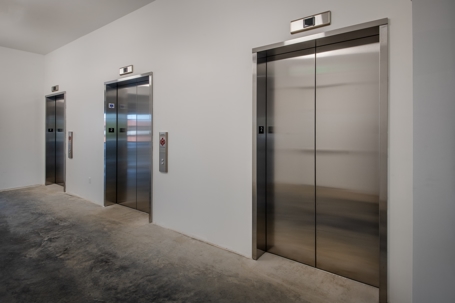
Imagine you’re just going about your business one day, maybe you’re at work, or maybe you’re on vacation and staying in a hotel, or maybe you’re going to a doctor’s appointment, and, like any other day, you get into an elevator. Most of the time, this would just be a regular part of your day. You wouldn’t even think twice about it. Nobody gets into an elevator thinking that the elevator is going to malfunction. And most of the time, elevators work exactly as they are supposed to and don’t cause any problems.
The thing is that elevator accidents are a lot more common than you might think.
By some counts, around 10,000 people across the country are injured each year due to elevator accidents. These injuries are frequently caused by elevator doors malfunctioning or the elevator not being properly aligned with the adjacent floor.
Our attorneys have handled cases involving all sorts of elevator accidents in counties across the state of Florida. We represent people who have been injured in elevator accidents in Miami, Broward, Palm Beach, or anywhere else in the state.
If you were injured in an elevator accident in Florida and are wondering whether you might have a case, keep reading.
Yearly Inspections
With some exceptions, Florida law generally requires that elevators be annually inspected by a Florida-licensed certified elevator inspector or by a municipality or county under contract with the Bureau of Elevator Safety. Elevators must have a valid certificate of operation posted inside the elevator. You’ve likely seen that certificate hundreds of times in elevators and not even noticed it.
But passing the yearly inspection is just the minimum. Even after the elevator passes the annual inspection, elevator owners must continue to properly maintain the elevator in good working order at all times.
And even an elevator that passes its annual inspection could still have problems. You never know if an elevator will pass the inspection one day, then a few days later, it stops operating properly.
Common causes of elevator accidents
- The elevator stops above or below the exact level where it is supposed to stop. This results in an adjacent floor that is higher or lower than the elevator floor, causing people to trip when entering or exiting the elevator.
- Doors closing too quickly or with too much force. Typically, elevator doors move pretty slowly, which is obviously necessary for safety purposes. But when an elevator door closes too quickly or too forcefully, injuries can result.
- Door sensors not working. Most of us have, at one time or another, run to catch an elevator and stuck a hand or foot over the elevator threshold to keep the elevator door from closing. But if the door sensors don’t recognize your hand or foot, the doors might keep closing, which can cause serious injury.
- Elevators suddenly stopping without warning. This oftentimes results in people being jolted around inside the elevator.
Negligence per se
A malfunctioning elevator is obviously a significant hazard for people using that elevator. The Florida Legislature has recognized the importance of ensuring that elevators are functioning properly and has accordingly enacted laws to make sure that elevator owners are responsible for keeping their elevators in good working order.
Florida Statutes Section 399.02(5)(b) states in relevant part: “The elevator owner is responsible for the safe operation, proper maintenance, and inspection and correction of code deficiencies of the elevator after a certificate of operation has been issued by the department. The responsibilities of the elevator owner may be assigned by lease.” That statute requires that elevator owners (or lessees) bear responsibility for making sure that their elevators are operating safely and that they are properly maintained at all times.
If the elevator owner (or responsible lessee) fails to comply with the statute, then they may be liable for negligence per se. That means that if your case proceeds to trial, you may be able to have the judge instruct the jury that if they find that the elevator owner or lessee violated Florida Statutes Section 399.02(5)(b), they were negligent. This sort of instruction is very helpful if your case ultimately goes in front of a jury.
What you should do after an elevator accident in Florida
If you are injured after an elevator accident, there are a few things you should do:
- If you are seriously injured, call 911 for help.
- Get medical attention immediately.
- Report the incident to building management.
- Take photos and videos of the elevator and surrounding area. The more the better. Take photos and videos of the elevator and whatever it was that actually caused your accident, such as the elevator floor, the uneven adjacent floor, etc.
- Call an experienced attorney. Not all attorneys have experience handling elevator accident cases. If you were injured in an elevator accident, make sure to find an attorney who has handled these types of cases before.
Call our office today for a free consultation
If you’ve been injured in an elevator accident in Miami, Broward, Palm Beach, or anywhere else in Florida, call our office today at (954) 833-1440 for a free consultation. We represent clients injured in elevator accidents throughout all of Florida.